
After Decades of Wonder, PacSci’s Dinosaurs Retire
For more than 40 years, Pacific Science Center’s dinosaurs were more than exhibits. They were magic brought to life. They inspired wide-eyed wonder, sparked curiosity, and created memories that still bring smiles today.
Families posed for photos with a T. rex looming overhead. Kids raced through the exhibit, clutching their Dino Passports, eagerly stamping each page. Teens marveled at the moving jaws, the gush of air pistons, and animal sounds. Many of us remember that mix of awe, excitement, and maybe just a little fear when those prehistoric creatures came to life.
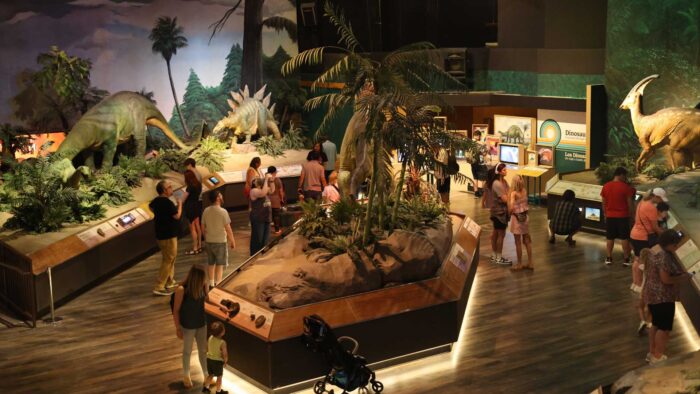
In The Beginning…
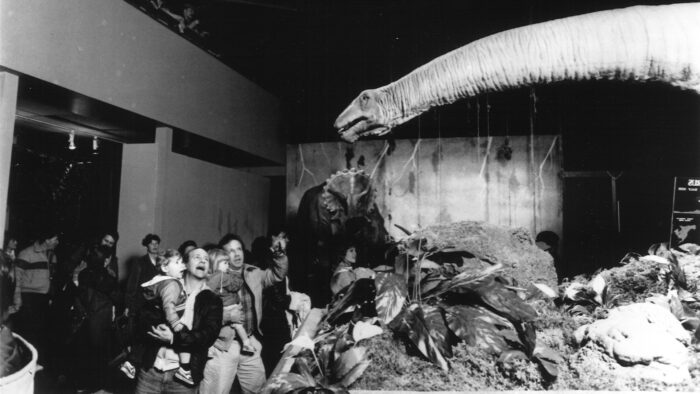
The story begins in 1984, when PacSci introduced Dinosaurs: A Journey Through Time as part of Science Circus, a now-retired winter-break program that featured rotating experiences for families. That year, dinosaurs were selected as the main attraction, and the response was immediate.
Visitors packed the building, eager to see the animatronic creatures and collect stamps in their Dino Passports. By the end of Science Circus, nearly 47,000 people had visited, showing how deeply dinosaurs resonated with guests.
The exhibit returned the following year, this time drawing more than 66,000 visitors. What began as a temporary holiday feature was already becoming one of PacSci’s most beloved traditions.
Popular Paleontology
A dino-craze swept the nation in the late 1980s and early 1990s, and PacSci’s programming followed suit. Visitors of all ages—adults, families, and kids alike—enjoyed exploring the Mesozoic Era.
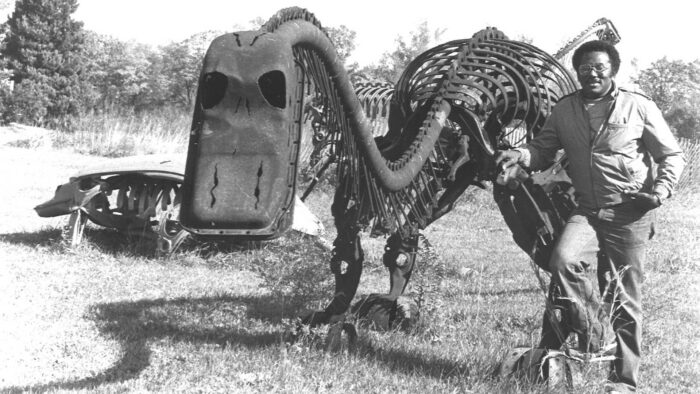
In 1986, artist Jim Gary displayed his Twentieth Century Dinosaurs, a collection of life-sized sculptures built from car parts. Guests watched him demonstrate his techniques and discovered how creativity and engineering could bring prehistoric creatures to life. Dinosaurs also appeared in late-night science programs, lecture series with world-renowned paleontologists, and even as submissions in PacSci’s Robot Sculpture Contest, sponsored by the King County Waste Reduction & Recycling Project.

In 1987, PacSci’s dinosaurs hit the road for their first Washington State tour, opening in Spokane and drawing 105,000 visitors throughout the tour. The tour allowed kids and adults across the region to get up close and personal to the exhibit for the first time, deepening the connection between science, imagination, and hands-on discovery.
Becoming Part of the PacSci Family
PacSci’s dinosaurs had found a home in a 4,500-square-foot gallery by 1991. Visitors inspected intricate details, traced the contours of giant skeletons, and felt the thrill of standing beside creatures that once ruled the Earth. Some exhibit elements even made their way to the Seattle Art Museum, a sign of how deeply they had embedded themselves in local culture.
The excitement soared again in 1994 with the arrival of Dinosaurs of Jurassic Park, which featured props and artifacts from the blockbuster film and drew an astonishing 341,000 visitors.
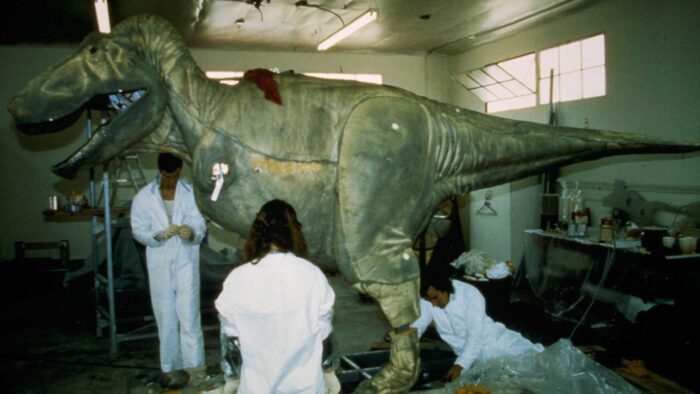
By the early 2000s, Dinosaurs: A Journey Through Time had become a centerpiece of the guest experience. Sue—the largest and most complete Tyrannosaurus rex skeleton cast from the Field Museum in Chicago—arrived at PacSci in 2002. Guests standing beneath her massive frame imagined the world she once dominated, bridging the gap between prehistory and modern curiosity.
Visitors of all ages kept coming back, year after year, for the next two decades, permanently securing the exhibit’s status as a beloved, multigenerational Seattle experience and shaping countless childhoods.
Beyond the Exhibit
PacSci’s dinosaurs roamed far beyond their gallery walls. They became part of nearly every aspect of our programming and campus life. For overnight Camp-Ins, families enjoyed “Dancing with the Dinos,” a playful activity that let kids burn energy in the shadow of their favorite prehistoric giants. Summer campers paddled around the Pond Dinosaurs, carefully steering canoes past towering sculptures. Temporary outdoor installations—including metal dinosaur skeletons by Jim Gary and other artists—added new bursts of creativity and surprise each year.
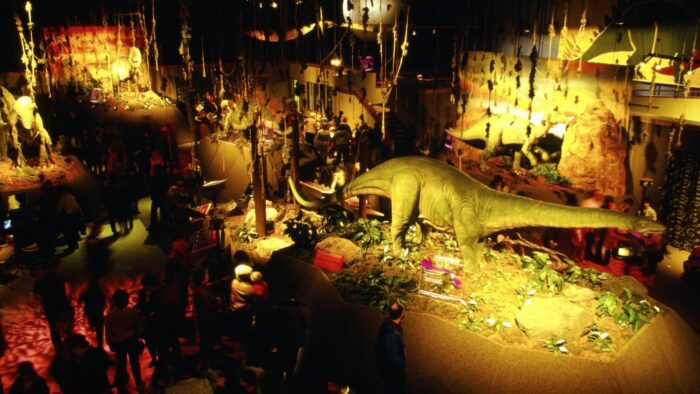
Over time, the dinosaurs became bona fide local celebrities.
They made appearances on local TV alongside personalities such as Jeff Renner and KSTW’s Roscoe and Ronnie. They showed up on the packaging of Taco Time kids’ meals, as birthday party themes, and in countless school projects. For many, these dinosaurs served as milestones of childhood, family traditions, and memories that lasted long after each visit.
The End of an Era
After more than four decades, the time eventually came to retire PacSci’s beloved dinosaurs. The animatronics required significant maintenance to keep them running safely and reliably. Many components were custom-built in the 1980s and 1990s, making repairs increasingly complex and expensive. After the company that originally created the animatronics went out of business, preserving them at a high standard became harder with each passing year.
When we made the decision to decommission the exhibit, we approached it with the same care and respect the community had shown these creatures. Staff documented each piece, evaluated preservation options, and explored ways to honor their legacy—including by preserving two that remain in our Main Entry today.
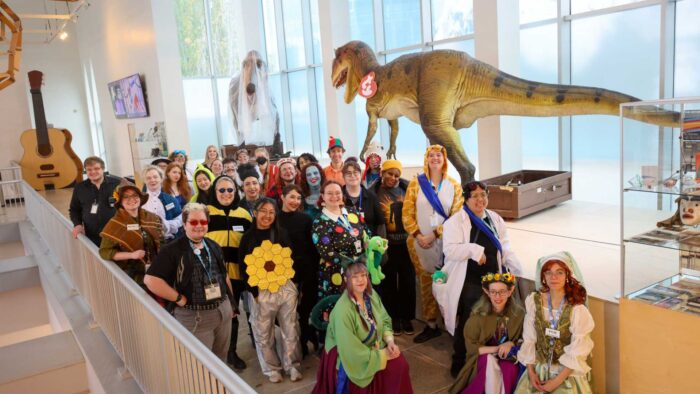
This work ultimately led to a unique and heartfelt opportunity: giving the community a chance to adopt and care for the dinosaurs themselves through a special fundraiser. Even in retirement, the dinosaurs continue to spark creativity and connection in new ways.
Remembering the Magic
For anyone who ever felt their heart race as a T. rex turned its head, stamped a Dino Passport, or peeked nervously around a dark corner of the gallery, these creatures were never just animatronics. They were companions in curiosity. And their legacy will live on.
Our staff has learned just as much from building, maintaining, and presenting our prehistoric pals as our community has from visiting them. The dinosaurs have and will continue to shape how we design new exhibits and create experiences that spark discovery in the next generation of curious minds.
For our community—families, teachers, teens, staff, and lifelong dinosaur fans—they will always be part of our story.
Always.